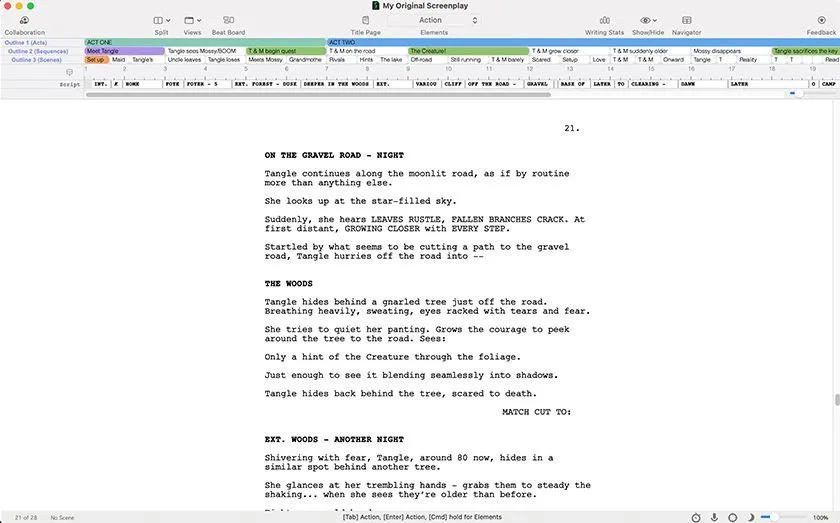
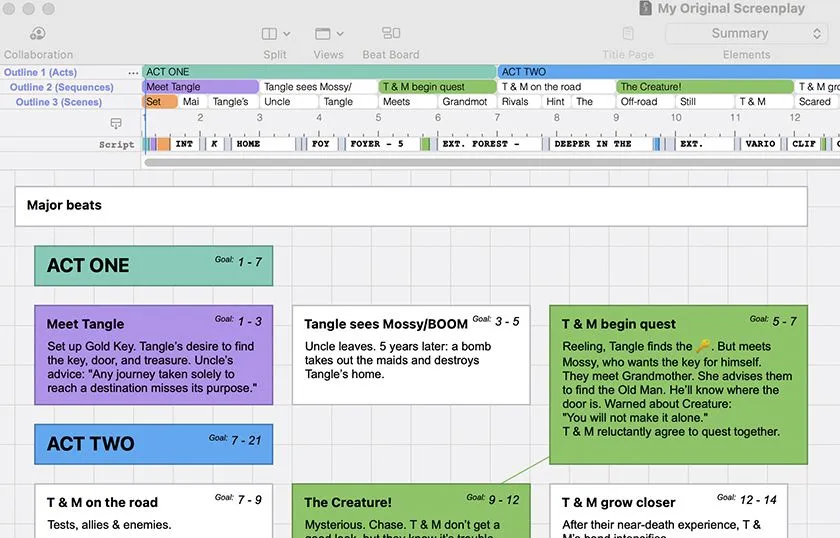

Final Draft is a popular software program designed specifically for screenwriters and playwrights. It is widely used in the entertainment industry to create and format scripts for movies, TV shows, and stage plays. The final project provides industry-standard formats, scene numbering, character tracking, and collaboration tools that make the scripting process more efficient and standardized.
OVERVIEW OF FINAL DRAFT
Final Draft is the best screenwriting software that has become the gold standard for professional screenwriters, studios, and production companies around the world. Designed to meet the unique needs of screenwriting, Final Draft provides a wide range of tools and features to facilitate the entire screenwriting process. The final project can automate the complex and often precise format requirements of the film and television industry. Authors can validate their scripts against industry standards, and the software handles everything from margins and fonts to page and scene transitions.
One of the main advantages of Final Project is the highly customizable writing environment. Writers integrate their creative process with powerful software tools that allow them to effectively outline, brainstorm, and organize ideas before writing a script. The platform’s template system makes this process even more sophisticated, offering predefined templates for different script types, including screenplays, teleplays, and stage plays.
Collaboration is a key theme in the design of the final project. The software supports multiple writers working on the same script simultaneously and fine-tunes revision control. This collaborative approach facilitates teamwork and allows writers, editors, and other stakeholders to contribute seamlessly to the project. Such characteristics are especially valuable in the collective nature of the entertainment industry.
FEATURES OF FINAL DRAFT
AUTOMATIC FORMATTING
Final Draft benefits from industry-standard automatic formatting, ensuring that all elements—scene titles, story lines, character names, dialogue, parentheses, and transitions—are formatted to Hollywood specifications without the need for manual adjustments. This feature eliminates common formatting errors by dynamically adjusting margins, spacing, and pagination as you write, and supports over 100 formats, including screenplays, television shows (single-camera and multi-camera), stage plays, and graphic novels. It saves writers time on technical details and lets them focus on storytelling, while the software ensures compatibility with production pipelines where even the slightest deviation can cause delays.
LOVEBOARD
Loveboard provides a visual, drag-and-drop storyboard interface similar to traditional note cards on a corkboard, allowing writers to intuitively outline scenes, reorder sequences, and outline story structure. Users can color-code the rhythm of characters, plot points, or themes, attach images or notes, and instantly convert panels into fully scripted scenes with a single click. The tool supports complex projects like multi-episode seasons, helping to connect the rhythm between acts, maintain pacing, and help emotional arcs align perfectly before drafts.
OUTLINE EDITOR AND STRUCTURE LINES
The Outline Editor allows for hierarchical outlines with multiple levels of nesting, with scenes expanding or collapsing for easy navigation, and is complemented by Structure Lines that connect related elements such as script subplots. These features facilitate brainstorming, revision control, and non-linear writing as changes to the outline are seamlessly propagated throughout the body of the script. Ideal for long-form content, it helps writers visually track growing events, climaxes, and resolutions, reducing structural rewrites.
SMARTTYPE AUTOCOMPLETION
SmartType intelligently suggests and auto-completes recurring elements like character names, locations, and scene descriptions based on previous usage, and supports consistency throughout your draft. As you type a few letters, it predicts the full entry from a drop-down list, speeding up your input and preventing errors like misspelled props or inconsistent aliases. It evolves with your script, adapting to new additions, and automatically includes audio and off-screen annotations.
REAL-TIME COLLABORATION
Real-time co-authoring allows multiple users to edit the same script or Beat Board simultaneously from anywhere, with live updates, colored cursors that identify contributors, and version history to undo changes. Comments, highlights, and @mentions streamline feedback, and page locking prevents accidental overwriting during production. Secure cloud sync ensures teams – writers’ rooms, directors, producers – stay connected without email chains.
EDIT MODE
Edit Mode automates draft tracking with color-coded changes for each version (e.g., blue for first pass, red for producer notes), page locking, scene skipping, and dialogue re-storage. It creates a revision history and reports that are essential for updates during filming as scripts evolve daily. Productions rely on it to budget for the impact of additional scenes or assets.
ADVANCED REPORTING
Built-in reports break down characters (arcs, number of dialogues), locations (day/night split), scenes (length, cost), and assets, and export them to Excel or PDF for advanced planning. These insights help schedulers identify imbalances, such as overused batches, and help writers self-edit to improve efficiency.
CUSTOMIZABLE WORKPIECES AND MODES
Users can customize toolbars, panels, and views (e.g., Navigator 2.0 for jumping through timelines, and Focus/Midnight/Night modes to reduce distractions and eye strain). Typewriter mode scrolls text to the cursor, Emoji support adds color to notes, and multi-device sync (Mac, Windows, iOS via Final Draft Go) keeps workflows portable.
SYSTEM REQUIREMENTS
- Supported OS: Windows 11/10/8.1/7
- Memory (RAM): 1 GB of RAM or more is required
- Hard Disk Space: 200 MB or more required