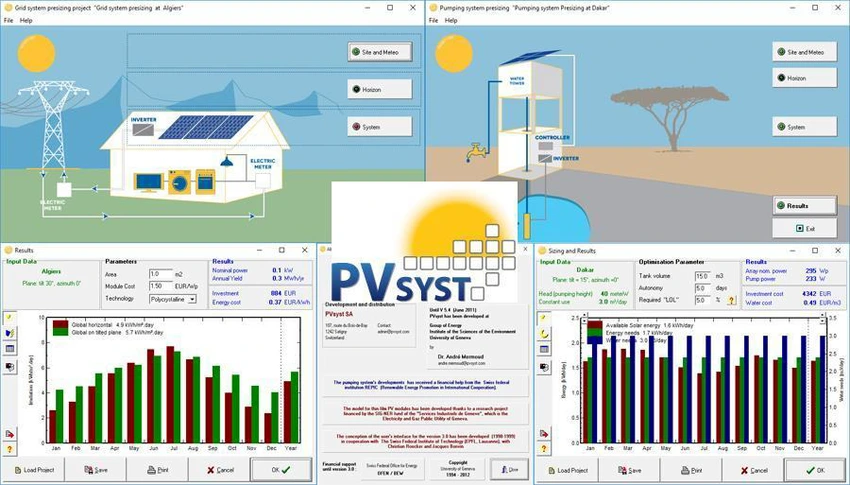
PVsyst is professional photovoltaic simulation software designed for planning, designing, and analyzing solar energy systems. It assists engineers and solar energy professionals in calculating energy production, assessing system losses, analyzing the impact of shading, and optimizing project performance through the use of weather data and detailed simulations. It supports grid-connected, off-grid, and solar-powered pumping installations.
OVERVIEW OF PVSYST
PVsyst is comprehensive photovoltaic (PV) system design and simulation software developed for solar engineers, architects, researchers, and renewable energy professionals. It enables users to plan, evaluate, and optimize solar energy projects through detailed performance simulations and energy yield calculations. This software supports grid-connected solar systems, off-grid installations, and solar-powered pumping systems. Users can work with climate databases, photovoltaic modules, inverters, batteries, and other system components to create designs for actual projects.
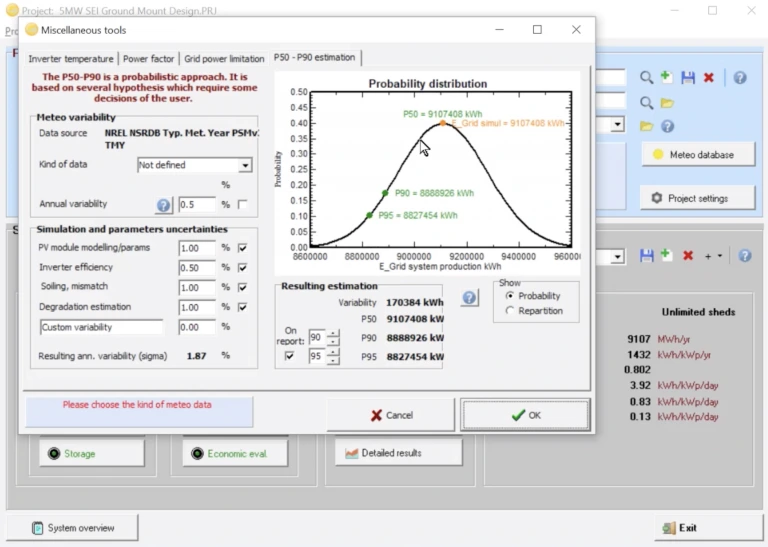
PVsyst also provides tools for analyzing shading, electrical losses, panel orientation, system efficiency, and expected energy production. Its simulation reports help users understand system performance and compare different design configurations prior to installation. Additional features include economic evaluation, battery storage analysis, and 3D modeling to assess the impact of nearby shading objects.
FEATURE OF PVSYST
COMPREHENSIVE SOLAR SYSTEM DESIGN
PVsyst enables users to design and evaluate various photovoltaic installations, including grid-connected, off-grid (standalone), and solar-powered pumping systems. It assists in determining the optimal system configuration based on project requirements and available resources.
PRECISE ENERGY PRODUCTION SIMULATION
The software calculates expected solar energy production by utilizing weather data, system specifications, and operational conditions. Simulations—conducted on an hourly or other time-step basis—help users estimate energy output and compare different system designs.
SHADING ANALYSIS AND 3D MODELING
PVsyst provides 3D modeling tools for defining nearby shading objects, such as buildings, trees, and other structures. It enables the assessment of shading effects and the calculation of their impact on the performance of photovoltaic systems.
WEATHER AND COMPONENT DATABASES
The software includes databases for meteorological data, as well as information on system components such as solar panels, inverters, and batteries. Users can import external weather data and select appropriate equipment for their projects.
LOSS ANALYSIS AND SYSTEM OPTIMIZATION
PVsyst analyzes various system losses, including those caused by shading, temperature effects, electrical losses, and inverter conversion losses. These results help engineers identify performance limitations and improve system design.
ECONOMIC EVALUATION AND REPORTING
PVsyst generates detailed simulation reports, including energy production estimates, performance indicators, and a breakdown of losses. Its economic assessment tools can evaluate project costs, return on investment (ROI), and the levelized cost of energy (LCOE) to support project planning.
SYSTEM REQUIREMENTS
- Supported OS: Windows 10, or Windows 11
- Architecture: 32-bit or 64-bit, as supported by the Windows version
- RAM: At least 2 GB recommended for PVsyst 8
- Free Disk Space: At least 2 GB
- Screen Resolution: 1280 × 720 pixels