
Plan B: Terraform is a science fiction city-building and logistics game developed by Gaddy Games and available on PC via Steam. The game challenges players to build supply chains, manage transportation, and ultimately transform a barren planet into a habitable world. Starting with miners, warehouses, and factories, players must balance resource production, expand cities, and carefully optimize routes to be more efficient. Over time, they will move from industrial growth to climate engineering, creating oceans, forests, and sustainable ecosystems.
The gameplay is repetitive and has clear objectives, but the transportation system feels limited and can frustrate players who want more complex logistics. The visuals are simple yet effective, with color-coded controls, and the soundtrack creates the laid-back atmosphere of a science fiction movie. However, the story is very minimal and serves more as a guide than a rich narrative.
Overall, Plan B: Terraform is a mechanized experience that is limited in terms of storytelling and transportation complexity, and is best suited for those interested in automation and resource management.
Transportation Challenges
The transportation aspect is getting a bit too complicated for my taste. Trains are great for moving from one point to another, with no intermediate stops, and no command to keep the flow going over long distances. Moving everything from concrete blocks and steel bars to complex nanotubes in bulk requires a lot of connectivity, and careful use of warehouses that can handle anything from short distances.
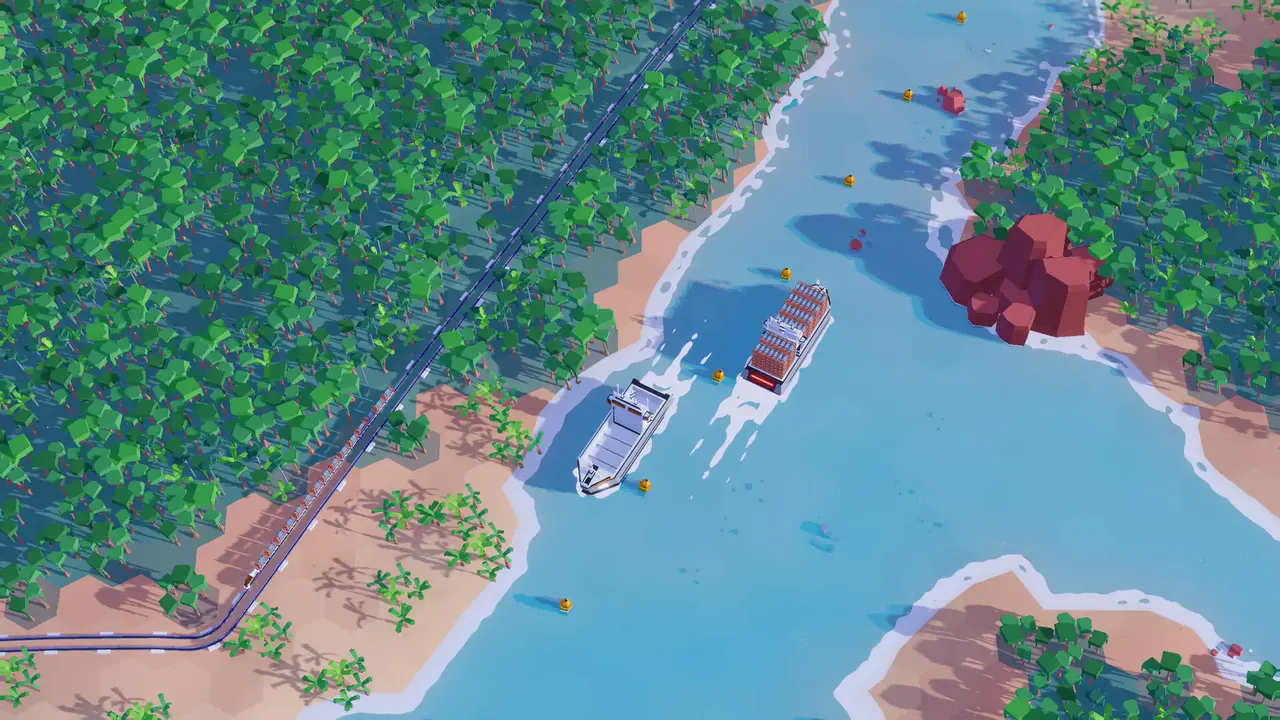
Long-Term and Short-Term Goals
The long-term plan is to restore the optimal conditions for survival on Earth. That means creating enough water to form an ocean, growing forests, and allowing animals to roam freely. The short-term plan is to create a climate that allows our three cities to thrive by getting all the resources they need from convenient supply centers.
Rebuilding Transport Routes
With the game speed set to the lowest setting, I’m working on rebuilding most of the transport routes from the manufacturing and mining centers to the cities. It quickly becomes clear that I’m also going to need to relocate some of the major manufacturing centers. While I’m at it, it’s time to shift the balance between mining and manufacturing, with better storage everywhere to provide as many intermediate resources and finished goods as possible.
About Plan B: Terraform
Plan B: Terraform is developed and published by Gaddy Games. I played it on PC using Steam, and the title is not available on other hardware. The video game guides players through the construction of a new home for humanity, acquiring vast resources, producing and delivering finished goods.
Story and Narrative
Don’t expect much from the story arc. After some serious work, you’ll find a new planet that supports life, and the players are in charge of it. They can’t mess with the cities they’re given, but they can do whatever they want. There’s no mention of other life forms on Earth, and it’s unclear how humanity managed to transport so much industrial infrastructure there.
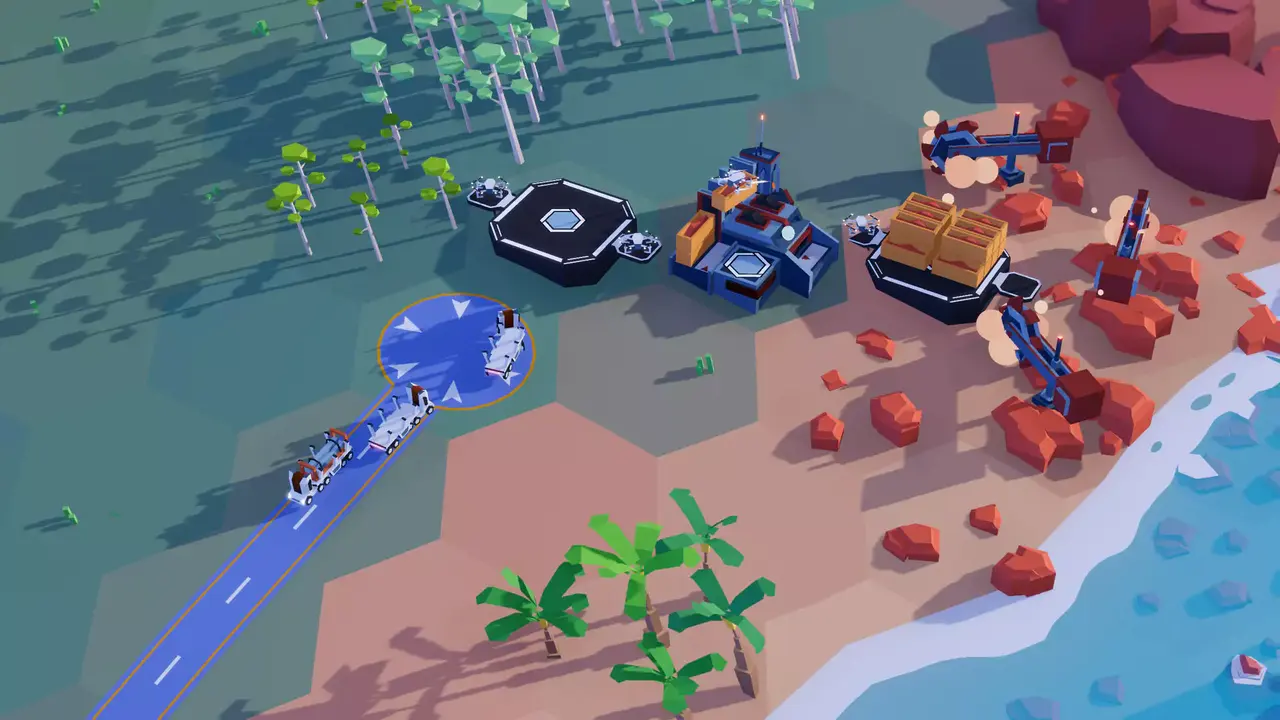
The story is told in limited but clearly defined stages. Plan B: Terraform tells people exactly what to do, and explains the basics with simple but clean text prompts. The sci-fi inspiration is clear, but there’s no attempt to introduce new twists. While there are often minor stories like misplaced resources and incorrect factory orders as players make changes to their chosen planet, the experience is mostly focused on mechanics.
Game Mechanics and Progression
The entire game loop is pulled from the factory automation distance. Players start with a handful of miners, a warehouse, and a factory. The first order of business is to place them on a copper supply and create a network that reliably creates multiple buildings that make up that supply. Then it’s time to use the same parts to create chains that produce mechanical parts, concrete, or a variety of other resources.
It’s a good idea to have a dedicated space for each type of end product. Then focus on cities, keeping in mind that their needs will change rapidly as they reach a certain population threshold, and provide the concrete they need to develop. New types of buildings will appear that require more than one input, which means players will need to develop transportation infrastructure, which is a bit more than I would like.
Terraforming the Planet
After a certain population growth, Plan B focuses on actual terraforming. This pumps greenhouse gases into the thin atmosphere, significantly increasing the temperature. Then, when the barren planet has a layer of water, it needs to extract oxygen. Soon, cities will need to grow vegetables grown on real farms, and the idea of building a space elevator becomes important. When the ocean appears, it will be possible to add trucks and ships to the railway.
Relaxed Gameplay and Optimization
The good news is that the stress level is low. Players can pause at any time to take into account the situation, change any part of their production base or change the transport route. Players get explanations for each objective and gradually introduce new recipes. The problem is optimization. It is very easy to be satisfied with the logistics network when only 10 recipes are being produced, but when it grows to 20 or 30, there is always the temptation to rebuild the entire system.
Limitations of Transportation
The biggest limitation of the title is transportation. Players can not always create complex routes with many stops and many rules to create a good network. Players may struggle to follow the simple narrative, which is mostly informative text.
Graphics and Interface
Plan B: Terraform isn’t a graphical powerhouse. In fact, both the planet and the many structures players build look fairly simple. The color coding associated with various resources is helpful, and the game does its best to show players how these and their intermediate products move across the landscape before they become useful. The interface is easy to understand, but it doesn’t hurt to quickly look at all the recipes in one place.
Sound and Atmosphere
The sound design doesn’t help with immersion. The soundtrack, designed to linger in the background as players ponder the complex logistical questions, is pleasant and memorable. The world itself is in the midst of a complex terraforming process, but it’s quiet. I like the soundtrack, which adds to the sci-fi atmosphere.
The Good Side
- Focus on production and transportation networks
- Wide terraforming options
- Lots of information to help players make decisions
The Bad Side
- Limited narrative
- Constant transportation options
- The world is too quiet
Conclusion
Plan B: Terraform offers an experience of automation and terraforming that doesn’t feel too overwhelming. The level of complexity gradually increases as cities demand more products and the quest to create climates and oceans increases. The mechanics allow players to create quick and dirty solutions, and it’s easy to redesign entire systems in the name of optimization.
Unfortunately, the basic design will be difficult to please players who don’t like automation and supply chains. Additional elements of cognition or the ability to interact with the townspeople would have helped. Plan B: Terraform is complex but relaxing, and will offer dozens of hours of optimization for anyone who likes the idea.
Review keys provided by the developer.